


What Type of Catering Service Is Best for Different Event Sizes?
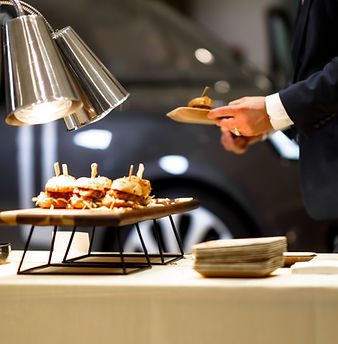
The best catering service for an event depends on more than guest count.
A smaller gathering may benefit from plated service, family-style dining, or boxed meals, while a larger event may work better with a professionally managed buffet, multiple service points, or another scalable format.
The right choice depends on:
Number of guests
Event purpose
Venue layout
Meal timing
Level of formality
Guest movement
Menu variety
Dietary requirements
For events throughout Dallas-Fort Worth, Ferah Catering & Events offers several catering formats that can be matched to different event sizes and experiences.
This guide explains how to think about catering service types for small, medium, and large events.
Quick Answer: Which Catering Type Fits Which Event Size?
A simple way to think about it is:
Event Size | Catering Formats to Consider |
Smaller gatherings | Plated, family-style, boxed meals, passed appetizers |
Mid-size events | Buffet, plated, family-style, reception displays |
Larger events | Buffet, chef action stations, multiple service areas, structured plated service where appropriate |
This is not a fixed rule.
A 40-person executive dinner may be ideal for plated service, while a 40-person casual team lunch may work better with a buffet or boxed meals.
Likewise, a large wedding can still use plated service if the venue, staffing, timing, and event plan support it.
1. Start With Event Purpose, Not Guest Count Alone
Guest count matters, but it should not be the only decision factor.
Consider two events with 75 guests.
Event A
A formal client dinner.
Event B
A company training day.
Both have the same number of guests, but the catering needs are very different.
The first may call for plated service.
The second may work better with boxed meals, buffet service, or another efficient format.
Before choosing a catering type, define what the event is meant to accomplish.
2. Catering for Smaller Events
Smaller gatherings may include:
Executive meetings
Leadership dinners
Client lunches
Intimate weddings
Private celebrations
Team gatherings
These events often allow more control over seating, service timing, and menu presentation.
Catering styles that may work well
Plated meals
Plated catering can suit formal or structured events where guests remain seated.
It may work well for:
Executive dinners
Client events
Formal private celebrations
Intimate weddings
Family-style service
Family-style catering can create a more social dining experience.
Shared dishes are placed at the table so guests can remain seated while serving themselves.
Boxed meals
For business meetings, trainings, or working lunches, boxed meals can offer an efficient service format.
Passed appetizers
For smaller networking events or receptions, passed appetizers may create a polished and flexible experience.
3. Catering for Mid-Size Events
Mid-size events might include:
Department gatherings
Corporate celebrations
Weddings
Client appreciation events
Business receptions
Social events
At this scale, catering decisions should consider both guest experience and service efficiency.
Buffet service
A buffet can work well when you want to provide multiple selections and allow guests to choose from available dishes.
The catering team should consider:
Buffet placement
Number of guests
Guest flow
Venue space
Timing
Menu structure
Plated service
Plated service can still work very well for mid-size events, particularly when the event is formal or follows a structured program.
Family-style service
This can work when table interaction is important and the venue provides enough room for shared dishes.
Reception displays and passed appetizers
These formats can suit networking events, social gatherings, and events where movement is part of the experience.
For more detail, see Ferah's guide to buffet vs plated vs family-style catering.
4. Catering for Large Events
Large events may include:
Company-wide celebrations
Conferences
Large weddings
Corporate galas
Grand openings
Large social functions
At this scale, logistics become especially important.
The catering team may need to consider:
Multiple service areas
Guest flow
Staffing
Timing
Venue access
Table layout
Beverage service
Setup and breakdown
Ferah Catering & Events has experience supporting events with 1,500+ guests, so large-event planning is an important part of the service approach.
Buffet service for large events
Buffets can be scalable when properly planned.
Depending on the event, multiple service points may help reduce congestion.
Chef action stations
Action stations can create an interactive experience while distributing guests across different areas of the venue.
Plated service for large events
Plated service can still work for larger events, but it requires more precise coordination.
Important factors include:
Accurate guest counts
Seating arrangements
Service timing
Dietary requirements
Staffing
Event schedule
5. Guest Flow Matters More as Events Get Larger
As guest count increases, movement becomes a bigger issue.
For example, sending several hundred guests through a single buffet line may create unnecessary delays.
The catering plan should account for:
Where guests enter
Where food is served
How many service points are needed
Whether guests remain seated
When speeches or presentations begin
For larger events, the catering setup should be designed as part of the overall event flow.
6. Venue Layout Can Change the Best Catering Format
The physical space can influence which service style is practical.
Smaller venues
A compact venue may not have enough room for large buffet setups or multiple stations.
Larger venues
A larger room may allow:
Multiple buffet areas
Reception displays
Chef action stations
Separate beverage areas
Formal venues
Some spaces may naturally support plated or family-style dining.
The catering decision should reflect what the venue can realistically accommodate.
7. Corporate Events Need Different Formats Depending on Purpose
Corporate catering is not one single format.
A company may need different catering styles for different events.
Executive meeting
Possible formats:
Plated meal
Boxed meal
Family-style service
Team lunch
Possible formats:
Buffet
Boxed meals
Grab-and-go
Client event
Possible formats:
Plated service
Passed appetizers
Reception display
Company celebration
Possible formats:
Buffet
Chef action stations
Family-style
Plated service
Businesses planning events can review Ferah's corporate catering services.
8. Weddings Also Require a Format That Matches the Guest Experience
Wedding catering decisions should consider:
Number of guests
Venue
Reception schedule
Desired atmosphere
Speeches
Entertainment
Dietary needs
Table layout
Plated weddings
Can create a formal, structured experience.
Buffet weddings
May offer flexibility and visible menu variety.
Family-style weddings
Can create a warm and social meal.
The best choice depends on how the couple wants the reception to feel.
Explore Ferah's wedding catering services.
9. Menu Variety Should Match the Service Format
The menu and service style should be planned together.
Ferah Catering & Events offers multiple cuisine categories, including:
Italian and Mediterranean
Southern Comfort
BBQ
Indian and South Asian
Tex-Med
For example, approved menu items that may be considered depending on event format include:
Southern Comfort
Chicken & Waffle Bites with Maple Glaze
Maple Pecan-Crusted Chicken Skewers with Honey Dijon
Strawberry Fields Green Salad
Maple Bourbon Chicken
Indian + South Asian
Butter Chicken
Chicken Tikka Masala
Saag Paneer
Paneer Tikka Masala
Biryani
Plain Naan
Garlic Naan
These are examples from the approved Ferah menu, not fixed event packages.
Final availability and suitability should be confirmed for each event.
Review current options on the Ferah Catering menus page.
10. Dietary Requirements Can Affect the Best Service Style
Dietary needs should also influence the catering format.
Depending on the event, guests may have:
Vegetarian preferences
Vegan preferences
Gluten-free requirements
Food allergies
Other dietary considerations
For plated service, dietary meals may need to be associated with specific guests.
For buffets, suitable selections and dish identification should be planned clearly.
For family-style meals, shared dishes may require additional consideration.
For boxed meals, individual dietary selections may be easier to organize for some events.
For more detail, see Ferah's guide to catering for dietary restrictions.
11. Event Timing Should Influence the Decision
The catering format should fit the schedule.
For example:
Short business meeting
A boxed or grab-and-go format may be practical.
Formal dinner
Plated service may fit a structured evening.
Networking reception
Passed appetizers and reception displays may support guest movement.
Large celebration
A buffet or multiple service areas may help manage flow.
The event schedule and catering plan should be coordinated together.
12. Choose the Format Based on the Experience You Want
A useful question is:
How do you want guests to experience the meal?
If you want:
Structure
Consider plated service.
Flexibility
Consider buffet service.
Shared interaction
Consider family-style service.
Movement and networking
Consider passed appetizers or reception displays.
Efficiency
Consider boxed or grab-and-go meals.
The best format is the one that supports the event rather than forcing the event to fit the food service.
Catering Types by Event Size
Small events
Often suitable for:
Plated meals
Family-style service
Boxed meals
Passed appetizers
Medium events
Often suitable for:
Buffet service
Plated meals
Family-style service
Reception displays
Large events
May be suitable for:
Multiple buffet service points
Chef action stations
Structured plated service
Large-scale reception formats
These are planning considerations, not fixed rules.
Event Size and Catering Decision Table
Planning Factor | Small Event | Mid-Size Event | Large Event |
Guest flow | Easier to manage | Requires planning | Critical |
Service timing | Flexible | More structured | Highly coordinated |
Buffet setup | Simple if space allows | May need multiple lines | Multiple points may be useful |
Plated service | Easy to control | Requires coordination | Requires precise logistics |
Family-style | Often practical | Depends on table space | More complex |
Boxed meals | Highly practical for business events | Can work well | Useful for specific event types |
Chef stations | Optional | Can add interaction | Useful for larger social events |
Dietary planning | Individualized | Structured | Needs organized tracking |
Common Mistakes When Choosing a Catering Type
Choosing based only on guest count
Event purpose matters just as much.
Ignoring venue limitations
Not every space works for every catering format.
Choosing a buffet without planning traffic flow
Buffet layout matters more as guest count increases.
Selecting plated service without considering timing
Structured service requires coordination.
Choosing family-style without enough table space
Shared dishes require room.
Forgetting dietary needs
The service format can affect how dietary selections are handled.
Questions to Ask Before Choosing a Catering Service Type
How many guests are attending?
What is the purpose of the event?
How formal should the meal feel?
Will guests be seated or moving around?
Does the venue have enough room for buffet or station setups?
Are speeches or presentations scheduled?
What dietary requirements need to be accommodated?
How much guest interaction do we want during the meal?
Will bar service be included?
How complex is the event timeline?
These questions help narrow down the most suitable format.
Frequently Asked Questions About Catering Types for Events
What are the main types of catering service?
Common event catering formats include buffet service, plated meals, family-style dining, passed appetizers, reception displays, chef action stations, boxed meals, and grab-and-go options.
What catering type is best for a small event?
Smaller events may work well with plated service, family-style dining, boxed meals, or passed appetizers depending on the purpose and venue.
What catering type works well for a large event?
Large events may use buffets, multiple service areas, chef action stations, or structured plated service. The right format depends on venue, timing, staffing, and guest flow.
Is buffet catering better for large events?
Not always. Buffets can be scalable, but large events may also use plated or other service formats if the logistics support them.
Is plated catering only for weddings?
No. Plated service can work for corporate dinners, client events, private celebrations, awards events, and other formal gatherings.
Is family-style catering suitable for corporate events?
It can be appropriate for certain company dinners, leadership gatherings, or social business events where shared dining and conversation are important.
Can boxed meals work for corporate events?
Yes. Boxed meals can be useful for meetings, trainings, working lunches, and other events where individual distribution is practical.
How does event size affect catering planning?
Larger events generally require more attention to guest flow, service timing, staffing, venue layout, and food distribution.
Choose the Catering Style That Fits the Event
There is no single catering format that is best for every event size.
The strongest decision comes from considering:
guest count + event purpose + venue + timing + service style + menu + dietary needs + desired guest experience
A smaller event may benefit from plated or family-style service.
A mid-size event may work well with a buffet, plated service, or reception format.
A larger event may require multiple service points, chef action stations, or more structured logistics.
Ferah Catering & Events provides customizable catering for corporate events, weddings, business functions, social events, and private celebrations throughout Dallas-Fort Worth.
Explore Ferah's event catering services, review the current menus, or discuss your event size and service requirements with the team.
Planning an event in DFW?


Comments